Does any book open more occultly?
Human reason has this peculiar fate that in one species of its knowledge it is burdened by questions which, as prescribed by the very nature of reason itself, it is not able to ignore, but which, as transcending all its powers, it is also not able to answer.
What is Kant thinking? Why affright the reader in the first sentence? “Hear your fate: You will ask questions that you are required to ask and that you are not permitted to ignore; but you will not be able to answer those questions—they are too much for you, you are too limited, too weak.” So why read on? The requirement to ask will not be relaxed. You will have to ask, have to pay attention. Your powers will not enlarge, grow. So why read on? What is the value of reason if this is true of it? Is reason, too, broken, like everything else about us?
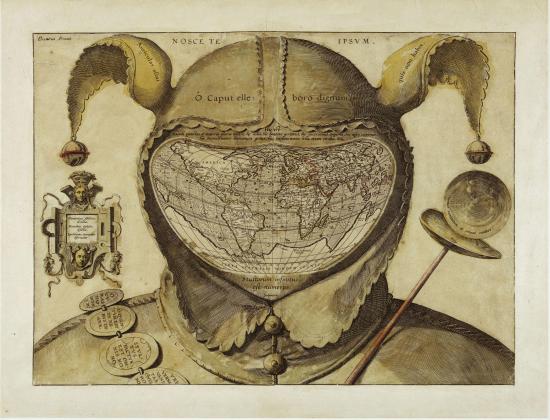
It is easy to think of Kant as reason’s champion, its scarf affixed to his armor, a colorful declaration, as he jousts with speculative metaphysics. But that is not quite right. Shake up CPR; shuffle its Table of Contents. Imagine, if you will, a Noumenal Table. The Antinomies would come first, syllogistically displaying the peculiar fate of reason. (If I remember correctly, Gabriele Rabel more or less arranges contents this way in his book of selections (Kant)—or at least he talks about the preferability of so arranging them.) The reason Kant seeks to understand is not divine; it is human; it is antinomian. Nothing divine could be fated for such perverse knottedness, such abyssal self-conflict, such stopless restlessness. Reason can be, must be, Critized. But, even Criticized, reason is not divinized. It recognizes what it is but cannot stop being what it recognizes itself to be. By ascesis, by discipline, it can cease asking unrequired questions, and it can come to see the peculiarity of the required questions. But that’s all. What is the value of reason? Well, it has value. It serves us well empirically, here under the sun. But it lacks the fullness of value we could have attributed to it when we thought it divine (as perhaps the Greeks did). CPR teaches a skepticism about human reason, even as it attempts to subjugate Humean skepticism.
Since I have mentioned the chiastic structure of TLP and PI, let me note that the Antinomies are placed by Kant at what could be regarded as the crux of CPR, at its dialectical middle. That is a way, on a chiastic scheme of organization, of placing the Antinomies first. Anyway, the book begins with the Antinomies furled into a remarkable sentence, a sentence that is unfurled across the length of the book.

 Quantum Est In Rebus Inane