You appeal to my writings, and testify to what I may at some time have said or written. You may deal in this way with others, who in their discussions follow prescribed rules. We live for the passing day ; we say whatever strikes our minds as probable ; and so we alone are free.
Category Archives: virtue and vice
It’s not “human nature” !
A useful reminder.
The popular idea that Christianity says “human nature” is inherently bad is actually the opposite of what the earliest Christian theologians believed. This book challenges the popularized negative view by proposing a prophetic alternative grounded in early Greek Christian sources. It draws on the wealth of early theological reflection, the wisdom of the desert mothers and fathers, and the heritage of Eastern Christianity to discover what God has made us to be.
Nonna Verna Harrison, God’s Many-Splendored Image: Theological Anthropology for Christian Formation
This book arrived several months ago. I have dipped into it, and have wanted to get down to a serious reading of it many times, but let’s just say that other things have intervened. I don’t intend blogging on it in detail, worthwhile though that would be, because such an intention would no doubt simply go the way of all my other…
View original post 428 more words
More on Abiding in Hope
Abiding in hope…
Ed Mooney, over at Mists on the Rivers, has been mulling over the Heidegger passage I posted yesterday, as have I. The passage fascinates me in part because so many paths intersect in it: one from Socrates and his avowal of ignorance, one from Eckhart and his working-out of contemplation, one from St. Thomas and his condemnation of curiositas as a form of cognitive intemperance, one from Neitzsche and his linking the will to knowledge to the will to power, one from Husserl and his plying of the reduction, one from Marcel and his ideal of secondary reflection, and one from Wittgenstein and his contrast of explanation and description.
I cannot rise to the level of Ed Mooney–but let me say a bit more about the line from Marcel. Marcel distinguishes primary from secondary reflection by distinguishing between what we might call their ‘objects’, problems and mysteries. There is a lot to say about that distinction, and I have toyed with it on the blog a time or two (here for example). But a key idea is the idea of investigations that are, as it were, self-willed, where the investigator stands above, over and against, what he investigates, and one where the investigator is ‘object-willed’, moved to consideration of what she stands enmeshed in, alongside, and which calls out to her for consideration. We might say that in the first case, the investigation proceeds in light produced by the investigator, in the second, in light produced by the ‘object’ investigated. (Marcel works a far-reaching change on the popular understanding of mystery, which he regards, not as a darkness that overwhelms, but as a light that is blinding, –at first, but that becomes eventually the light in which we see light: think of Christ on Mount Tabor.) Heidegger seems to understand some things as worthy of thought, as calling out to us to think them, and to think in relationship to them. Curiosity all-too-often is something that we project upon the world–we think about what we regard as worthy of thought, instead of what calls us out of ourselves and into thought.
There seems to me little doubt that Walden (to hook up with Ed’s reflections) is not only a book about but a book that exemplifies secondary reflection. And I think that secondary reflection is at play too, albeit in different ways, in Socrates’ unknowledge, Echart’s contemplation, St. Thomas’ studiositas (the contrast to curiositas), Husserl’s reduction and Wittgenstein’s descriptions. It seems likely true even in Nietzsche’s transvalued knowledge. For all of these, the relationship between the investigator and the investigated transforms the investigation, and that must always already be on the mind of the investigator. The world does not bumble around us, a flattened pother of objects indifferent to their investigation and that we investigate willy-nilly as we choose, but instead structures and variegates itself around us, featuring objects that call us to thought and objects that do not. And what they reveal to us is not a matter of what we take from them but of what they give us, sometimes only after we have earned it by abiding in hope before them, listening even to their silence, waiting for them to speak. What we ‘know’ of them in such moments is not something that we can commodify, something that we can learn by banking on our own conceptions of reasoning about them, our own ability to wring answers to our questions from them.
Didn’t Aristotle push us this way, too, long ago, when he noted that the problem of method is entirely (note that word) determined by the object?
Abiding in Hope: Heidegger
This passage of Heidegger has been rolling around in my head all day. It must be connected to something else I have on my mind. Lord willing, I will eventually figure out what that is.
Thirst for knowledge and greed for explanations never lead to a thinking inquiry. Curiosity is always the concealed arrogance of a self-consciousness that banks on a self-invented ratio and its rationality. The will to know does not will to abide in hope before what is worthy of thought. –“A Dialogue on Language”
Vanitas Vanitatum, John Webster (Poem)
Kierkegaard, Browning and Dramatis Personae
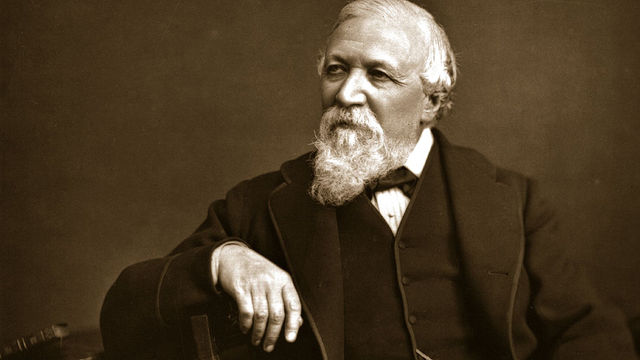
I’ve been reading Browning for the last two or three years–but only here and there, a little at a time. He’s like strong drink: in the right amount, he sweetens and deepens experience; in the wrong amount–too much–he overwhelms experience, making it too easy to lose oneself in the various dramatis personae on offer. But what has been on my mind lately is the systemic and instructive similarity between what Browning is doing in offering his dramatis personae and what Kierkegaard is doing in offering his psuedonyms.
Browning plots his course in various places, Book III of Sordello, in the Epilogue to Dramatis Personae, in intrducing The Ring and the Book and in Fifine at the Fair. He aims to be a “Maker-see”, not just a poet who tells you what he sees but rather a poet who causes the reader to see:
See it for yourselves,
This man’s act, changeable because alive!
He takes it that we simply do not possess the requisite moral imagination–call it a negative capability–for really understanding the lives and the aliveness of others:
Action now shrouds, now shows the informing thought;
Man, like a glass ball with a spark a-top,Out of the magic fire that lurks inside,
Shows one tint at a time to take the eye:
Which, let a finger touch the silent sleep,
Shifted a hair’s-breadth shoots you dark for bright,
Suffuses bright with dark, and baffles so
Your sentence absolute for shine or shade.
Human beings are not always in their Sunday best or Saturday worst. Browning wants us to catch a glimpse of the “bustle of a man’s work-time”, to see what the man or woman sees on a middling Monday, to see how hard it is to categorize when we attempt to realize the concrete spiritual drama of an individual’s life.
Once set such orbes, –white styled, black stigmatized, —
A-rolling, see them once on the other side
Your good men and your bad men every one
From Guido Franceschini to Guy Faux,
Oft would you rub your eyes and change your names.…The inward work and worth
Of any mind, what other mind may judge
Save God who only knows the thing He made,
The veritable service He exacts?
Browning believes his work will be of value for so long as the soul of a person remains precious to us. Now Kierkegaard works a slightly different angle, but it is importantly related in its technique. He too wants to be a Maker-see. He wants us to confront the concrete spiritual drama of the lives of others. But the lives he dramatizes are lives we are meant to see as objects of comparison with our own–they are meant to lead us to self-confrontation. No doubt Browning’s dramatic monologues can and in fact often do the same, but that does not seem to be their primary purpose. We might say that whereas Browning wants us to awaken to the mystery of others, to the littleness of our understanding of others; Kierkegaard wants us to awaken to the mystery of ourselves, to the littleness of our understanding of ourselves. I suspect, though, that the two tasks are inextricably related, and that their being so is one reason why often Browning seems like Kierkegaard and Kierkegaard like Browning.
I plan to pursue this comparison across a few post in the next week or two.
Vice, the Absolute Effector of Infelicity
From a translator’s note to Plutarch’s “Whether Vice is Sufficient to Render a Man Unhappy”:
Our author having, in the beginning, describ’d the misery of a covetous person, and of a courtier, adds, in the prosecution of his principle design, that Vice is the absolute effector of infelicity, having need of no instruments or servants, to render a man miserable; whence he collects, that there is no danger or calamity which we ought not rather to choose, than to be vicious.
Newman on the Human Condition
To consider the world in its length and breadth, its various history, the many races of man, their starts, their fortunes, their mutual alienation, their conflicts; and then their ways, habits, governments, forms of worship; their enterprises, their aimless courses, their random achievements and acquirements, the impotent conclusion of long-standing facts, the tokens so faint and broken of a superintending design, the blind evolution of what turn out to be great powers or truths, the progress of things, as if from unreasoning elements, not towards final causes, the greatness and littleness of man, his far-reaching aims, his short duration, the curtain hung over his futurity, the disappointments of life, the defeat of good, the success of evil, physical pain, mental anguish, the prevalence and intensity of sin, the pervading idolatries, the corruptions, the dreary hopeless irreligion, that condition of the whole race, so fearfully yet exactly described in the Apostle’s worlds, “having no hope and without God in the world”–all this is a vision to dizzy and appall; and inflicts upon the mind the sense of a profound mystery, which is absolutely beyond human solution.
What shall be said to this heart-piercing, reason-bewildering fact?
I used to spend pleasant hours with my teacher, Lewis White Beck, talking about our favorite writers. He introduced me to Cardinal Newman, and to the glories of Newman’s Apologia Pro Vita Sua. Who has ever written more perfectly controlled English prose? Here, a piece of prose to range alongside Samuel Johnson’s The Vanity of Human Wishes. Consider the opening ten lines or so of that great poem.
Let Observation with extensive View,
Survey Mankind from China to Peru;
Remark each anxious Toil, each eager Strife,
And watch the busy scenes of crouded Life;
Then say how Hope and Fear, Desire and Hate,
O’erspread with Snares the clouded Maze of Fate,
Where Wav’ring Man, betray’d by vent’rous Pride,
To tread the dreary Paths without a Guide;
As treach’rous Phantoms in the Mist delude,
Shuns fancied Ills, or chases airy Good.
Dallas Willard on Forgiveness
I have been reading lots of Willard lately. Here’s a passage worth thinking about.
The moral dimensions of life pose similar demands on the substance of the self. They require the drawing together of massive dimensions of the self, if not of the self as a whole. The morally significant act is an act of the whole person. This is well illustrated by the moral act of forgiveness. It seems to me that forgiveness is best understood as a choice to resume relationships, in the light of good to be realized, after some violation of moral trust that has had significant harmful effects on those who are doing the forgiving. It is decided, by the one who forgives, that the good to be realized by resumption of the relationships—by no means saying the relationships are to be just the same as before the violation—is not to be sacrificed to the gratifications of resentment and retaliation.
Forgiveness is not a tiny, inward act which a discrete effort of will brings forth in response to specific types of occasions. Rather, it is part or product of an overall orientation of lives of a certain kind, which is “there” before any occasion or whether or not any occasion ever arises. The media spokespeople and various public officials expressed amazement at how forgiveness functioned in the Amish community after the recent schoolhouse slayings. But that was the “natural,” though not the inevitable or unalloyed, response of the people involved. The intentionality, structures of thought, historical understanding, feeling, and evaluation around which their consciousness and life were organized, support and issue in forgiveness in relevant situations. The people in that community thought about and approached forgiveness from within the framework of the intentional structures of their particular kind of life and world. Forgiveness requires a substantial self, incorporating subtly nuanced and dynamically organized long-term dispositions of thought, feeling and valuation into a character embracing all essential dimensions of the self. (If it hasn’t got to your body yet, it has a ways to go.) To cultivate forgiveness as a part of human life, if it means anything at all, is to cultivate an overall character of the sort that can do forgiveness, and, when in good shape, can do it at a walk. It is better when one does not have to do this in a particularly self-conscious manner, but any sensible way is better than none at all. “The quality of mercy is not strained,” wrote a profound soul. Likewise for forgiveness. A forgiving person will not understand what all the fuss is about. What else would one do? Like the “righteous gentiles” that put themselves in mortal danger to save their Jewish neighbors. Was there, given who they were, anything else to be done?
That Ascetic Time of Year
Here’s a very interesting essay by Dallas Willard on ascetic practice and Christian morality. A Lenten gift.
 Quantum Est In Rebus Inane