An oldish, but short, essay of mine on the resurrection body.
Wondering, Where are We Going? (Mother Maria)
Christmas, 1975. Mother Maria writes a letter to a friend, musing on her own particular situation and the difficulties of getting her Monastery repaired. (That Christmas was icily cold, and Mother Maria and two others, and a cat named Nimmy, moved into the Monastery although it lacked doors and some windows.) What she says of her situation though expands to include all our situations.
We are wondering why ever more difficulties pursue us to the limit of endurance, and any new ones brace us up to a feeling that they come to destroy, and if we do not give them reality, but march through them, they cannot harm us. It is not a fairy tale that the are evil forces. Only we refuse to ‘attend’ to them, but I am crying out for help for us all; or, at least, for that which is meant to be; and that it should be achieved. Next year Chapel will live–all ready for Easter. Till April it will not be easy, but possible–till we have the whole house. It will no more be an inhuman situation. It is dark so soon, and so very dark. Not a sound. I am wondering and wondering. Where are we going?
A Smiling Philosophy (Santayana)
Here is one more system of philosophy. If the reader is tempted to smile, I can assure him that I smile with him, and that my system…differs widely in spirit and pretensions from what usually goes by that name. In the first place, my system is not mine, nor new. I am merely attempting to express for the reader the principles to which he appeals when he smiles. There are convictions in the depth of his soul, beneath all his overt parrot beliefs, on which I would build our friendship. I have a great respect for orthodoxy; not for those orthodoxies which prevail in particular schools or nations, and which vary from age to age, but for a certain shrewd orthodoxy which the sentiment and practice of laymen maintain everywhere. I think that common sense, in a rough and
dogged way, is technically sounder than the special schools of philosophy, each of which squints and overlooks half the facts and half the difficulties in its eagerness to find in some detail the key to the whole. I am animated by distrust of all high guesses, and by sympathy with the old prejudices and workaday opinions of mankind: they are ill expressed, but they are well grounded. What novelty my version of things may possess is meant simply to obviate occasions for sophistry by giving everyday beliefs a more accurate and circumspect form. I do not pretend to place myself at the heart of the universe nor at its origin, nor to draw its periphery. I would lay siege to the truth only as animal exploration and fancy may do so, first from one quarter and then another, expecting the reality to be not simpler than my experience of it, but far more extensive and complex. I stand in philosophy exactly where I stand in daily life; I should not be honest otherwise. I accept the same miraculous witnesses, bow to the same obvious facts, make conjectures no less instinctively, and admit the same encircling ignorance.
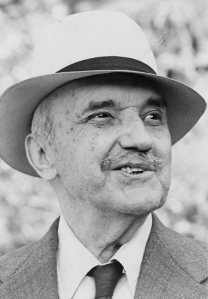
I can still remember the profound jolt this passage was to me during my sophomore year of college. I had somehow embarked on a course of Santayana reading, and even found a professor to aid me (Troy Organ, blessed man!). I promptly memorized the passage, and although I have forgotten much of it over the years, its brilliant pastiche of Luther’s “Here I stand. I can do no other”—“I stand in philosophy exactly where I stand in daily life; I should not be honest otherwise”–I have never forgotten. (Indeed, one of the singular moments of my recent life is connected with it. I was standing outside the Harvard Faculty Club, talking with Sean Kelly, and I quoted the line. It struck my ear strangely, I guess because I realized I was likely standing where Santayana himself had sometimes stood.) I still don’t know what I make of the contents of the book this passage prefaces–Scepticism and Animal Faith–but I have tried to think in creative fidelity to the passage. Anyway, the passage bore itself in on me as a compendium of some recent themes on the blog.
Socratic Irony, Good and Bad
 In his talk, “In Praise of Philosophy”, Merleau-Ponty begins his discussion of Socrates’ irony by considering his behavior at the trial:
What can one do if he neither pleads his cause nor challenges to combat? One can speak in such a way as to make freedom show itself in and through the various respects and considerations, and to unlock hate by a smile–a lesson for our philosophy which has lost both its smile and its sense of tragedy. This is what is called irony. The irony of Socrates is a distant but true relation with others. It expresses the fundamental fact that each of us is only himself inescapably, and nevertheless recognizes himself in the other. It is an attempt to open up both of us for freedom. As is true of tragedy, both the adversaries are justified, and the true irony uses a double-meaning which is founded on these facts. There is therefore no self-conceit. As Hegel well says, it is naive. The story of Socrates is not to say less in order to win an advantage in showing great mental power, or in suggesting some esoteric knowledge. “Whenever I convince anyone of his ignorance,” the Apology says with melancholy, “my listeners imagine that I know everything that he does not know.” Socrates does not know any more than they know. He knows only that there is no absolute knowledge, and that it is by this absence that we are open to the truth.
To this good irony Hegel opposes a romantic irony which is equivocal, tricky, and self-conceited. It relies on the power which we can use, if we wish, to give any kind of meaning to anything whatsoever. It levels things down: it plays with them and permits anything. The irony of Socrates is not this kind of madness. Or at least if there are traces of bad irony in it, it is Socrates himself who teaches us to correct Socrates…Sometimes it is clear that he yields to the giddiness of insolence and spitefulness, to self-magnification and the aristocratic spirit. He was left with no other resource than himself. As Hegel says again, he appeared “at the time of the decadence of the Athenian democracy; he drew away from the externally existent and retired into himself to seek the just and the good.” But in the last analysis it was precisely this he was self-prohibited from doing, since he thought that one cannot be just all alone and indeed, that in being just all alone he ceases to be just. If it is truly the City that he is defending, it is not merely the City in him but that actual City existing around him…It was therefore necessary to give the tribunal its chance of understanding. In so far as we live with others, no judgment we make on them is possible with leaves us out, and which places them at a distance.
For me, this is a Janus passage: it retrospects Reading “RM” 10 (as well as another recent post) and prospects Reading “RM” 11 (or it will, when I produce 11). –But for now I want to think about it just for Socrates’s sake. Montaigne I set aside. What interests me in the passage now is the contrast between good and bad irony. I agree that there is such a contrast and I agree in the main with Merleau-Ponty’s Hegelian understanding of it. Noting the contrast is important in reckoning with Socrates. (It is therefore important in teaching Socrates, as I now am. Students tend to react most strongly to the traces of bad irony in Socrates’ (good) irony and thus to treat his irony as (unalloyed) bad irony. Merleau-Ponty’s description helps me sympathize with the students when they react that way, without yielding to their reaction.) Socrates’ good irony hugs his ignorance, without crossing out that ignorance, rendering it merely apparent. As I have said in previous posts, Socrates targets double ignorance–thinking that you know when you do not know–and having that target makes irony all but unavoidable. Unlike simple ignorance–not knowing–double ignorance is not-knowing entombed in pride (self-conceit), coldly obstructed from the truth. Socrates’ good irony aims to disinter a person’s simple ignorance, and to bring a person to acknowledge that simple ignorance. Socrates’ good irony is, as Merleau-Ponty notes, a distant but true relation with others: distant–because if he comes too close he aggravates their pride, risks losing himself or approbates himself against their freedom; true–because genuinely hopeful and genuinely humble. Available, as I am now habitually putting it. Sometimes Socrates fails because he cannot maintain distance or maintain truth, and then he either misses irony altogether or he slips into some degree of bad irony. Good irony is Socrates’ way of making himself available to others without trespassing upon their freedom; it is also a way of targeting their pride, the pride that not only makes them unavailable to others, but makes them unhandy to themselves. Pride creates only the freedom to fall.
(A puzzle in Merleau-Ponty’s passage is its use of ‘distant’ and ‘distance’. Socrates’ irony is a “distant but true relation with others”, but Socrates will make no judgment on others that “places them at a distance”. I solve the puzzle this way: Socrates’ good irony does not place him at a judgmental distance from others. It is not a standing over and above them. In other words, Socrates can count himself among those he lives with, making no judgment on them that leaves him out, and which places them at a distance, even while his way of living among them is to maintain a distant but true relation to them. In fact, his ironic distance even aids his refusal to place others at a judgmental distance from himself: think of judgmental distance as a false relation to others.)
“Going the Bloody Hard Way” (Marcel)
It is indeed of the nature of value to take on a special function in relation to life and, as it were, to set its seal upon it. An incontestable experiment, which can scarcely be recorded in objective documents, here brings us the most definite proof: if I dedicate my life to serve some supreme cause where a supreme value is involved, by this fact my life receives from the value itself a consecration which delivers it from the vicissitudes of history. We must, however, be on our guard against illusions of all kinds which swarm around the word ‘value’. Pseudo-values are as full of vitality as pseudo-ideas. The dauber who works to please a clientele, even if he persuades himself that he is engaged in the service of art, is in no way “consecrated”; his tangible successes will not deceive us. Perhaps, in a general way, the artist can only receive the one consecration that counts on the condition that he submits to severe test. This does not necessarily take the form of the judgment of others, for it may happen for a long time that the artist is not understood by those around him–but it means at least that with lucid sincerity he compares what he is really doing with what he aspires to do–a mortifying comparison more often than not. This amounts to saying that value never becomes a reality in a life except by means of a perpetual struggle against easiness. This is quite as true in our moral lives as in scientific research or aesthetic creation. We always come back to the spirit of truth, and that eternal enemy which has to be fought against without remission: our self-complacency.
Quotable and Unquotable Signs (Peter Long)
As Frege was perhaps the first clearly to recognise, the sign for a property or relation…is not a quotable sign: it is not an isolable piece of language. Of course, it is not incorrect to call ‘(is) white’ a predicative expression or ‘north of’ a relational expression, but what is here being called a predicative or relational expression is logically peripheral to what we should call the sign proper for a property or relation. For the sign that is proper to a property must, of course, have a different form from that which is proper to a relation. We give expression to this difference when we say ‘It is of the essence of a property to be of something’ and ‘It is of the essence of a (dyadic) relation to be between one thing and another’. What these propositions convey could be expressed at the level of language by saying ‘The sign for a property contains the form of a sign for a possible subject of the property’ and ‘The sign for a relation contains the form of signs for possible terms of the relation’. These formulations are not Frege’s, but they express what he meant by calling such signs ‘incomplete’, as opposed to those signs whose form is such that they do not contain the form of other signs, which he calls ‘complete’. –Peter Long, “Universals: Logic and Metaphor”, p. 97
“Nothing Is Really Hard but to Be Real–” (John Ciardi)
—Now let me tell you why I said that.
Try to put yourself into an experimental mood.
Stop right here and try to review everything
you felt about that line. Did you accept it
as wisdom? as perception? as a gem, maybe,
for your private anthology of Telling Truths?
My point is that the line is fraudulent.
A blurb. It is also relevant that I know
at least a dozen devoutly intellectual
journals that will gladly buy any fourteen
such lines plus a tinny rhyme scheme and
compound the felony by calling that a sonnet.
—Very well, then, I am a cynic. Though, for
the record, let me add that I am a cynic with
one wife, three children, and other invest-
ments. Whoever heard of a cynic carrying a
pack for the fun of it? It won’t really do
I’m something else.
Were I to dramatize myself,
I’d say I am a theologian who keeps meeting
the devil as a master of make-up, and that
among his favorite impersonations he appears,
often as not, as the avuncular old ham who winks,
tugs his ear, and utters such gnomic garbage
as: “Nothing is really hard but to be real.”
I guess what the devil gets out of this—if he is
the fool he seems to be—is the illusion of
imitating heaven. If, on the other hand, he is no
fool, then his deceptions are carefully practiced
and we are all damned. For all of us, unless
we are carefully warned, will accept such noises
as examples of the sound an actual mind makes.
Why arc we damned then?—I am glad you asked that.
It is, as we say to flatter oafs, a good question.
(Meaning, usually, the one we were fishing for. Good.)
In any case. I may now pretend to think out the answer
I have memorized:
We are damned for accepting as
the sound a man makes, the sound of something else,
thereby losing the truth of our own sound.
How do we
learn our own sound? (Another good question. Thank you.)
—by listening to what men there have been and are
—by reading more poets than jurists (without scorning
Law)—and by reading what we read not for its
oration, but for its resemblance to that sound in which
we best hear most of what a man is. Get that sound into
your heads and you will know what tones to exclude.
—if there is enough exclusion in you to keep the
pie plates out of the cymbals, the tin horns out of
the brass section, the baling wire out of the strings,
and thereby to let the notes roll full to the ear
that has listened enough to be a listener.
As for the devil—when he has finished every imp-
ersonation, the best he will have been able to accomplish
is only that sound which is exactly not the music.
Reading “RM” 10: A Few Words on Montaigne, Socrates and Stoicism
After addressing Montaigne and Christianity, Merleau-Ponty turns to Montaigne and the Stoics. It will help us think about that relationship if we remind ourselves of a passage of Montaigne’s from Of Experience.
It is from my experience that I affirm human ignorance, which is, in my opinion, the most certain fact in the school of the world. Those who will not conclude their own ignorance from so vain an example as mine, or as theirs, let them recognize it through Socrates, the master of masters. For the philosopher Antisthenes would say to his pupils: “Let us go, you and I, to hear Socrates; there I shall be a pupil with you.” And maintaining this doctrine of the Stoic sect, that virtue was enough to make a life fully happy and free from need of anything whatever, he would add: “Excepting the strength of Socrates.”
Socrates trumps Antisthenes, even for Antisthenes; Socrates is master of masters. So he was for Montaigne too. This passage is one in which Montaigne signals his passage from the Stoics to Socrates.
Hamann dubbed Socrates the prophet of the Unknown God (thinking, of course, about St. Paul on Mars Hill). Merleau-Ponty notes of Montaigne that he invokes an Unknown God. But Montaigne also invokes, as Merleau-Ponty sees it, an Impossible Reason. Merleau-Ponty is driven to this phrase (and by the way, the capitalization is mine, not MMP’s) by Montaigne’s repeated strain of withdrawal, of preserving some piece of ourselves, some place in ourselves, from which we can see all that we do, all that we commit, all that we have committed to, as external–as something happening almost to someone else, as the vicissitudes of a role we play, but not of ourselves. This withdrawal, this holding back, this is what tempts Montaigne in stoicism. He can see that mixing in marriage, in love, in social life, in politics is to live according to others. Montaigne would rather live according to himself.
But, Merleau-Ponty argues, Montaigne cannot really hope to do what he would rather do. “He had described consciousness, even in its solitude, as already mixed according to its very principle with the absurd and foolish. How could he have prescribed consciousness dwell in itself, since he thinks it is wholly outside itself? Stoicism can only be a way-point.”
Montaigne knows that the world pulls us in, and does so not so much against our will as because of the nature of our consciousness. We will be mixed up with the world–that’s that. We cannot hole up in consciousness and let the world go by without touching it and without being touched. Socrates is the master of masters–in the world but not of it. Married with children, a soldier, an occasional (forced) politician, a man of conversation: he was decidedly mixed up with the world. But he somehow managed to avoid being mixed up by the world. In Porphyry’s Life of Plotinus, Porphyry marvels at Plotinus’ ability “to be present at once to himself and his friends”. Socrates had this ability; Montaigne could see it (as could Antisthenes: it is Socrates’ “strength”). Montaigne wants to find a way to live as Socrates did. He wants to understand how to live according to himself while he lives according to others. That could seem impossible–but Socrates realized the impossibility. So what are the “conditions and motives for this return to the world”, for this overcoming of Stoicism, this mixing with the world? That is the question Merleau-Ponty asks as he ends the section on Stoicism and prepares to begin the long final section of the essay–the answer to the question. Put the question this way: how can a person become disposable to the world, available to it, without becoming unhandy to himself?
A Little More on Church-Man’s Skepticism, and Hamlet
Reflecting on CMS last night, I was struck again by how much Hamlet is shaped by it. I suppose that is little surprise, really, since we know that Montaigne (in Florio’s translation) marked Shakespeare’s thought and language and that bits of the play rework bits of Montaigne. But it is also true–and here I do not know whether to say that Montaigne’s presence in the play is cause or effect or something else–that the Wisdom books of the Old Testament (including the sapiential Psalms) are also present throughout it. Hamlet is the Church-Man unbalanced, striving for some way of grasping per omnia vanitas without losing his grip on all that matters, and all that matters to him: CMS melds with madness. Hamlet strips Montaigne of the ironic strength of Socrates; Hamlet wittily but unwittingly depraves Montaigne’s skillful inconsequence into lived meaninglessness.
Hamlet forces his smiles.
Essence and Grammar (and Definition)
Reshef Agam-Segal has asked about the difference between Socrates’ desire for a definition and Wittgenstein’s for grammar. The two desires meet or can seem to meet in the word ‘essence’. Socrates wants to know, say, the essence of piety. Wittgenstein wants to know the grammar of piety (“theology as grammar”); and, according to Wittgenstein, “essence is expressed by grammar”. So each chases essence.
What Socrates chases is familiar enough (at least as standardly interpreted). What Wittgenstein chases is not so familiar. To succeed in construing the grammar of piety would be to express the essence of piety. The grammar of piety would be construed in an a series of grammatical remarks. But the series of grammatical remarks does not tell us the essence of piety. Rather, the series of remarks expresses the essence of piety. ‘Express’ in “essence is expressed by grammar” works intransitively. That is, what grammar expresses is not something that we can tell, can say. If you like, what grammar expresses is inexpressible. (Moving, in that sentence, from the intransitive to transitive.)
We are here at one of those anti-type spots in PI–of which, of course, TLP contains the type. We are in the ambit of showing/saying, as indeed in Wittgenstein we always already are. But, as my typological talk is meant to suggest, what we have in PI is something foreshadowed in TLP; but what we have in PI is not what we have in TLP. Getting the differences straight is more than I can do; I will though do what I can. Perhaps the best place to start is with a glaring absence in PI: the absence of the symbolism. The symbolism glyphs the pages of TLP. It wards those pages. Without a real, active and sympathetic inwardness with the symbolism, TLP is a closed book. (Anyone who has attempted to teach the book to undergraduates will know this.) But the symbolism is almost nowhere to be seen in PI. What does that mean? And what does it mean for showing/saying in PI? [Pause here to light pipe.]
One thing it means, I reckon, is that showing or expressing is now something done by means of ordinary sentences, by means of the spatio-temporal phenomena of language. The crucial issue in PI is the issue of our relationship to those sentences, to those phenomena. A sentence is a grammatical remark not in and of itself–noumenally, as it were–but rather because of our orientation upon it. The possibility of the orientation that makes a sentence a grammatical remark, and so one that expresses or contributes to the expression of essence, results from our being in the grip of a philosophical problem. The problems provide the light, we might say, in which a sentence can shine forth as grammatical, as essence-expression. Without the problem, the sentence is, well, just a sentence. Philosophy is a battle against the-bewitchment-of-our-intelligence by means of language, by means of the spatio-temporal phenomena of language. But the language is only a weapon in that battle–a weapon of peace, ultimately, to be sure–if we orient on it in a way made possible by a philosophical problem.
This makes philosophizing in Wittgenstein’s way both easier and harder. It is easier in that we need no special magical weapon, no Excalibur, no symbolism, to do what needs doing in philosophy. It is harder because the weapons we have can always appear to be no weapons at all, to be valueless in the fight. (“So? That’s just more words.”) Being in the grip of a philosophical problem makes the necessary orientation possible, but it does not make it automatic. Being in the grip of a philosophical problem can also make the necessary orientation look only like so much rigmarole, like a willful way of losing track of what really matters in responding to the problem. Losing our way among words can lead us further afield, but it can also allow words to lead us home in a way that they ordinarily do not. “Where the danger is, also grows the saving power.” [Pipe dies; re-light.]
Having written all this, I am aware that I have still not answered Reshef’s question. But I hope this opens the way to answering his question. And I hope to get back to his question again soon. (Thanks to D. for a recent useful conversation about these topics.)
 Quantum Est In Rebus Inane