Merleau-Ponty on Ideal Language

We all secretly venerate the ideal of a language which in the last analysis would deliver us from language by delivering us to things.

Reading Ebersole, Reading Bouwsma

(A section from an unpublished essay.)

Their pages crucially differ in animating spirits: I have talked about one
as mulish the other as sprightly. But I can say more. At an even deeper
level, Ebersole’s pages are animated by a strictness of linguistic conscience.
Bouwsma’s are animated by a spontaneity of linguistic consciousness—a lin-
guistic hilaritas libertatis. For example, there is an deep-going reason why
Bouwsma was attracted to and imitated pages of James Joyce, and self-
consciously built unacknowledged quotations or near-quotations of literary
works into the structure of his essays. Bouwsma provokes his reader ver-
bally, reminds his reader of all of the highways and byways of words, of all
the wonders of words, and of how their wonders can and should make us
marvel at them. Ebersole minces words. He was a working poet as well as a
working philosopher, but anyone who knows Ebersole’s poetry knows that in
it the same strictness of linguistic conscience is on display. I cannot imagine
Ebersole on a spree among words like Bouwsma’s in this passage of his John
Locke Lectures, a passage describing Plato’s Realm of Being:

Imagine…a museum—a museum, deep in calm, fixed in breath-
lessness, done in silence, clothed in invisibility, awful, laid away
in heaven. And the walls thereof are purest essence, some quint-
essence, some tri-essence, but none semi-essence. If senescence is
no wall, for neither is oldness nor youngerness any ness at all, all
is evermore and never the less. And of what essence and what
essences are those walls? Of all heavenlinessences are they and of
brightlinessence of the beaminest. Essences participating in one
another, they ring-round this conjugation of hyper-supers…This
is the museum of quiddities, of whatnesses in their highest nest,
tucked away, ensconced, waiting for the refiners defining, so fine
are they. The museum of none-such such-and suches.

Line up alongside that this from Ebersole’s (anticipatory-posthumous au-
tobiographical) poem, “Conversation with a Dead Philosopher” (a crow is
speaking):

The clock can’t tell you what it says
the way a human tells you.
Maybe I am just a mess of gears and wheels,
and everything I say
is just like half past two—
where I can’t tell you
what I say at all.
People stopped and puzzled when I talked,
wondered what to make of
anything I said.
And if I made them ask themselves
What of heads or tails to make
of a philosopher’s talking,
that was a good thing I did,
I would say.
Yes, I would say that.
Then he flew away,
calling “caw-caw.”

Here is another, related deep difference: it makes sense to say that Eber-
sole and Bouwsma each aims at a kind of simplicity, a philosophical sim-
plicity. But the simplicities aimed at are not the same. We can borrow
a pair of terms from French criticism in the nineteenth century: simplicité
and simplesse. The first we might call naive simplicity, the second
sophisticated simplicity.  The first is simplicity as a native endowment,
an unspoiled innocence or uncorruptedness.  The second is simplicity
as a complicated disposition, an achievement of disciplined responsiveness.
Ebersole presents himself as the simple man.  Bouwsma presents
himself as the simple wise man.  Ebersole’s mulishness, his strictness of linguistic
conscience, his simplicité mean that he is prone to be charged with failing to be a
philosopher by being a plain man. Ebersole can seem Xenophonic. Bouwsma’s
sprightliness, his spontaneity of linguistic consciousness, his simplesse mean
that he is prone to be charged with failing to be a philosopher by being a sophist.
Bouwsma can seem Protagorean.
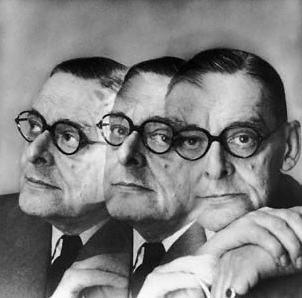
Eliot’s (Religious) Struggle with Words: Leavis

It is a mark of Eliot’s peculiar importance to us—that is, of his major status as a poet of our time—that he should have had his distinctive preoccupation with language.  I am thinking of the preoccupation that, with the pressure behind it, is expressed here, in the opening section V of ‘East Coker;:

So here I am in the middle way, having had twenty
years—
Twenty years largely wasted, the years of l’entre
deux guerres—
Trying to learn to use words, and every attempt
Is a wholly new start, and a different kind of failure
Because one has only learnt to get the better of words
For the thing one no longer has to say, or the way in
which
One is no longer disposed to say it

The poet of ‘The Hollow Men’ was clearly a man driven by a desperate need; a need to apprehend with sureness a reality that could compel belief, claim allegiance and create a centre of significance.  The association, or identification, of the quest driven by such a need with the unendingly resourceful struggle to ‘get the better of words’ determines the way and the sense in which Eliot’s later poetry is religious.

Now the mode of Ash-Wednesday differs very obviously from that of Four Quartets.  Nowhere in it is that anything that challenges the full attention of the waking mind in the blunt, prose-like way of the opening of ‘Burnt Norton’, where we seem to be starting on a metaphysical essay.  You might be inclined to say that the insistently liturgical element and the accompanying character of the rhythm—isn’t it incantory?—make a thinking attention to the sense impossible; at any rate, that they don’t demand it; rather, they discourage it.  If you said that, you would be showing that, though you might sincerely say that you enjoyed the poetry, you hadn’t really read it.  There would be no reason why you should quarrel with Anglo-Catholic expositors who make the poetry something utterly different from what it is, which is something utterly different as religious poetry from (say) Herbert’s.  For it is in answering the question, ‘In what sense is this religious poetry?’, that one has to take account of its insistent challenge to the thinking–the pondering, distinguishing, relating–mind.

Leavis on ‘Importance’

Nothing of important can really be said simply–simply and safely; and by ‘safely’ I mean so as to ensure that the whole intuited apprehension striving to find itself, to discover what it is in words, is duly served, and not thwarted.  It takes a context, often a subtly and potently creative one, to do that.

“The Eyelids Always a Little Weary”: Leavis on Pater—and Keats

Pater may talk of burning always with a hard gemlike flame, but there is nothing answering in his prose; it notably lacks all sensuous vitality.  Indeed, to point to Pater’s prose–cloistral, mannered, urbane, consciously subtle and sophisticated and actually monotonous and irresponsive in tone, sentiment and movement (the eyelids always a little weary)–is a way of giving force to the judgment that for the Victorian aesthete art is something that gets between him and life.  Nevertheless, we can see why pre-Raphaelite and Aesthete should have looked to Keats as they did; we can ourselves see in Keats (if we can see more too) the great Aesthete–the one Aesthete of genius.  For all his unique vitality and creative power, we can see him as related to them by those significantly associated traits which Pater presents:  the devotion to exquisite passion and finest senses, the religious unction of this aestheticism, the cherished pang of transience.

Style Meld–My Partial Answer

I want now to answer my own question, presented earlier in Style Meld.

F. R. Leavis–that is the writer whose writing I would most like to reduplicate in my own.  Part of what I love about Leavis is the spirit on display everywhere in his work, but most obviously perhaps in what he called his “higher pamphleteering”:  a remarkably strong push-back against the dead and deadening relationship to language shown throughout our culture, but particularly (alas!) among academic humanists—to use Leavis’ words, a “blind, blank, urbane unconcern” for the kind of sensibility that can live only in a living relationship to language, a kind of sensibility that runs deeply counter to the “technologico-Benthamite” times in which we live.  Leavis doesn’t just say things in this spirit, though; every sentence he writes embodies it.  His prose appeals, and perhaps can only appeal, to what he termed “the full attention of the waking mind”.   His sentences command a discriminating, nervous energy, and carry a relationship to their full context that shapes their content and the choices of words in which they are expressed.  So often in Leavis, the argumentative burden is borne not only by the relationships among his sentences but also and simultaneously by the relationships among the words of the sentences.  Leavis once remarked that he thought the novel should be a dramatic poem; and certainly for Leavis, criticism is a critical poem.  (Leavis’ clear concern for and complete mastery of the (internal and interrelated) rhythm of his sentences is comparable to a great poet’s concern for and complete mastery of meter.)  As Wittgenstein once said of Frege,  “I wish I could have written like Frege!”, I will say I wish I could write like Leavis!  (And of course I do not mean slavishly to copy his style or to produce some stiff-fingered pastiche of his writing, but rather to write in a way that displays the same spirit, as such a spirit might take form in my prose.)

I’ll supply some illustrative quotations, as separate posts, over the next few days.

News and MIA

Ed Mooney has begun a blog that promises to be very much worth following.  Look for it here.

I’ve been missing for a couple of days.  My son just graduated from AU, so I’ve been busy with ceremony and parties and suchlike.  Great weekend for him I hope; certainly a great one for me:  I’m proud of him.

From The Spiritual Letters of Fenelon

Excerpted from a letter to the Countess of Gramont, March 21, 1692:

Take up again the readings that have touched you.  They will touch you again, and you will get more out of them than the first time.  Bear yourself without flattering yourself or becoming discouraged.  This happy medium is rarely found.  We promise ourselves great things of ourselves and of our good intentions, or else we despair of all.  Hope for nothing from yourself.  Look for everything to God.  Despair of our own weakness, which is incorrigible, and unlimited confidence in the power of God, are the true foundations of every spiritual edifice.  When you will not have much time to yourself, do not miss making use of the least moments which do remain yours.  It does not take much time to love God, to renew yourself in his presence, to lift your heart to him, or to adore him from the depths of your heart, to offer to him what you are doing and what you are suffering.  This is the true Kingdom of God within us, which nothing can trouble.

One Morning Thought About Twin Peaks

I’ve been slowly re-watching Twin Peaks.  Back in the day, when it aired on network tv, I was transfixed—as were several of my friends in grad school.  We probably pored over Laura Palmer’s diary with more disciplined attention than we did the Kant or Aristotle or whatever we were reading.  Watching it now, knowing, as I do, the plot arc (such as it is), I have been free just to stew in the show, to study the remarkable set pieces (the graveside ceremony for Laura, the rock-and-bottle (-dream-Tibetan) mode of deduction scene, etc.), to reflect on why the show is so peculiar.

Here’s one thought:  the show is a study in the prolongation of mood.  The mood in question taxes description:  creeping, creepy, skin-crawling, comic, nonsensical, romantic, tragic, deadpan serious—something like that’s the mood, and it’s the mood of the moral investigation, because that is what the show is:  a moral investigation, a fabulous tragicomedy of manners.  —Deadpan serious: the characters often say something seriously that is ridiculous that is in another sense absolutely serious, serious beyond the character’s ability to know.  The moral investigation runs above and alongside, and sometimes in concert with, the criminal/mystical investigation of Laura’s murder, but it by no means is identical with it or fully parallel to it …

Now I need a cup of joe (“as black as midnight on a moonless night”)—and a donut!

Some Hesitant Thoughts after Mooney

I find what Ed has written very helpful, as I said.  One reason for that is because he clearly recognizes the difficulty of self-knowledge—that is, the conceptual difficulty about it (not the difficulty of acquiring it, although it is difficult to acquire).  Self-knowledge is not simply a species of information, information about myself.  Sure, there is lots of information about me, and lots of it I know (and some of it is hard to know, I need, e.g., doctors or x-rays to tell me about it), but none of that is what Socrates or Kierkegaard or Emerson calls on me to care about.  –In fact, Kierkegaard and Emerson signal this by ringing changes on the Delphic Commandment—“Choose yourself!” (Kierkegaard) and “Obey yourself!” (Emerson), distancing themselves deliberately from ‘know’ (without disavowing it).

As I see it, the difficulty (the conceptual difficulty) of self-knowledge reveals itself best when it is seen in the context of Perfectionism.  Now, although I am not quite a Moral Perfectionist of the Cavellian (Emersonian) sort, I am a Perfectionist.  (I suppose I could be called a Christian Perfectionist—of a Gregory-of-Nyssa sort.  Explaining that is a task for another day.)  And my Perfectionism can help itself to the “unattained but attainable self” structure that Cavell’s has.  Crucial to that structure is a form of self-involvement (in a non-pejorative sense) that can be described as knowing, as choosing and as obeying.  It can be described as discovery and as creativity.

Consider Kierkegaard’s “One must become a Christian.”  I take this as a grammatical remark.  But this means that no particular place a person finds himself on his Pilgrim’s Progress is going to be the final stop.  Even if the Pilgrim is, in one sense, a Christian, it will also be true that there is another sense in which he is not a Christian.  That is, for anyone who recognizes the grammatical remark, and lives in the light of that recognition, the term ‘Christian’ subdivides into two senses, one that applies to him now, and which seems to him now at best unsatisfying (conventional, rote, sclerotized, immanent), and another that does not (yet) apply to him now, but which seems to him to call him forward (and is unconventional, spontaneous, supple, transcendent).[1]  That person reaches out, as it were, toward the second sense by standing on the very edge of the first. The transcendent Christian self that the person is reaching out to is his own, himself, but is that transcendent self as yet is not fully determinate.  Who he will be when he becomes his transcendent Christian self is not (yet) fixed, not fully fixed.  And yet he will be himself.  He will be transmuted … into himself.  When he becomes his transcendent Christian self, he will come to know himself, but he will also choose himself, and he will obey himself.  He will discover himself and create himself.  Which of these descriptions we use will be a matter of how we center ourselves on the structure of his immanent Christian self and his transcendent Christian self.  If we center ourselves on the entire structure, then knowing is a natural enough description, since he comes to know a self he has not previously known, or to know about himself something he had not previously known.  If we center ourselves on his immanent self, then choosing is a natural enough description, since he determines or fixes, at least partially, that transcendent self.  Or, if we center ourselves on his transcendent self, then obeying is a natural enough description, since he has called himself  (immanent) to himself (transcendent).  So far as I can tell, none of these centerings is compulsory, all are available, and so each of the descriptions they generate is available—and natural enough. But even so, each of the descriptions is still in need delicate handling, since each is liable to be misunderstood.

Ed’s fascinating talk of ‘knowing-how’ relates to what I have in mind.  Ed understandably wants to retain the word knowledge (as I do too).  But since the knowledge we are after is not simply a species of information, a good thought is to treat the knowledge as know-how (where what is known is clearly enough not information).  Then we can think of our Christian as knowing how to become a Christian, and as utilizing his know-how by so doing.

Ed complicates his know-how story by bringing in ideas of loyalty, pledging and promising.  And here what he says sounds particularly Perfectionist.  When he mentions that the pledging he has in mind is “pledging-in-the-relative-dark”, I understand that as quite close to my idea that the transcendent self is not understood, not fully understood.

(I should add that although most of what I said on this topic in the previous post (and comments) painted self-knowledge as “confessional” or “reflective” (to use Ed’s terms) I too believe there is a commissive side to all of this, and that is part of the reason I have chosen to foreground my Perfectionist framework as I have.  Ed’s post helped me to see how better to balance what I wanted to say.)

Knowing, choosing and obeying are each natural enough descriptions, but each is liable to misunderstanding.  That all of the descriptions are natural enough reveals that each has its liability, since each normally ‘negates’ the other.  To seize one and to reject the others is not a good idea; the phenomenon to be saved is responsive to each, and not just serially but somehow all at once.  Socrates calls us to examine ourselves, so as to live worthily.  Kierkegaard calls us to choose ourselves, so that we are responsible for ourselves.  Emerson calls us out in front of ourselves, so that we can become our best.


[1] Each transcendent self condemns the immanent self and inspires its own eventual condemnation, since as it becomes immanent a new transcendent self becomes visible.